
Everything between a finished story and a box of printed books - age group, page count, illustrations, size, layout, ISBN, printing and selling - in nine steps, from a U.S. book printer.
Here's how to publish a children's book yourself, from finished story to printed copies you can hold, give and sell.
To self-publish a children's book:
You keep full creative control and all the rights, and you decide how many copies to print - from a single copy to thousands.
Getting a children's book published can be challenging, but how hard it is depends on the path you choose. The traditional route means submitting your manuscript to literary agents or publishers who receive many submissions every day, especially for picture books. Even if you land a deal, you may give up some creative control - including, often, the choice of illustrator.
True self-publishing is the alternative. You stay in control of the whole printing and publishing process, choose your own marketing, and keep the profits from every book you sell.
Be careful with companies that call themselves self-publishing services but work like vanity publishers. You pay them for editing, illustrations and every print run, you share the sale price with them, and they may own the rights to your book.
| True self-publishing (UBuildABook) | Vanity publishers “self-publishing” | Traditional publishing | |
|---|---|---|---|
| Who decides if it gets published | You | You, as the paying customer | An agent, then a publisher |
| Creative control | All of it, including the illustrations | Hybrid - you may have editorial standards to follow | Shared with the publisher |
| Rights | You keep them | Hybrid - the vanity publisher owns the rights | Licensed to the publisher |
| Upfront costs | You pay freelancers for editing and illustrations, if needed | You pay the publisher for editing, illustrations and other services | The publisher pays |
| Printing costs | Every print run, you decide where to print | You pay them for every print run - you can't go elsewhere to print your books | The publisher pays |
| Income | You keep what each sale earns | You share a portion of the sale price | An advance and royalties |
| Time to printed book | As soon as your files are ready | On the publisher's schedule | Often well over a year |
Decide who the book is for before you write a word. The reader's age sets the word count, the page count, the size of the type and how much of the story the pictures carry.
The rest of this guide focuses on picture books.
Picture books are short, so every word has to earn its place. Leave room for the pictures to tell part of the story, and think in page turns: a good turn makes the child want to see what happens next.
Illustrations are usually the biggest investment in a picture book, and the thing readers notice first. Your options are to illustrate it yourself, hire a freelance illustrator, work with an artist you know, or use photographs.
If you hire an illustrator, agree in writing on the number of illustrations, the deadline, the fee and who owns the finished artwork. Settle the trim size (step 4) first, so the art is created at the right shape.
For printing, create or scan the artwork at at least 300 dpi at the size it will print. Artwork that runs to the edge of the page needs extra image beyond the trim line, called bleed - see full bleed page layout.
The trim size is the finished size of the book. Choose it early, because it decides the shape of every illustration. Our standard children's book sizes are:
Then choose hard cover, which is sturdier and feels like a gift or library book, or soft cover, which costs less and is lighter to ship. You can print both in the same order. Compare hard vs soft cover pricing, book sizes and binding types.
Layout is where the words and pictures come together on each page. You do not need expensive design software for this.
The cover sells the book. Make the title readable from across a room and at thumbnail size on a website, and let the illustration show what kind of story it is.
The back cover needs a short description of the book, and a space for the barcode if you will sell it. Thicker books need spine text, and the spine width depends on the page count and paper - use our spine calculator, cover templates, and the hard cover or soft cover layout guide.
An ISBN is the 13-digit number that identifies your book to bookstores, libraries and online retailers. You need one to sell through those channels, and each format - hard cover and soft cover - needs its own. In the United States, ISBNs are issued by Bowker. A book printed only for family, a class or a fundraiser does not need one. On orders of 50 or more books, we can guide you through the ISBN number and barcode process.
Your story is protected by copyright as soon as you create it. Registering the copyright with the U.S. Copyright Office makes it much easier to enforce if someone copies your book.
This is where UBuildABook comes in. We are a U.S. book printer, and children's books are one of the things we print most.
Want to see the book before the full run? Print a single copy first, or ask about proof options. Sizes, bindings, custom options and sample books are all on our children's book printing page.
Self-published authors sell children's books in many places at once. We can ship your books to you, or ship part of the run straight to Amazon or any other distributor.
More ideas in selling your books. Wondering whether to print a run or print one at a time? See print on demand.
The total depends on how much you do yourself. The main costs are:
Get printing prices for your exact book with our instant pricing for 1 to 49 books, or request a quote for 50 or more.
Writing, editing and illustrating take the longest, often several months. Once your files are ready, we print in 7 to 10 business days after file approval, plus shipping.
Tell us page count, size and roughly how many copies. We will come back with real numbers, usually the same day.
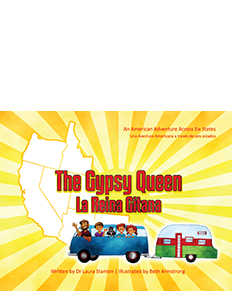
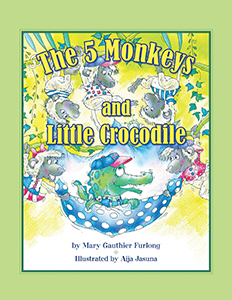
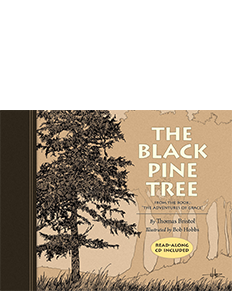
Every one of these was written by an independent author and printed by us. Click a cover to preview the book.
No. When you self-publish, you are the publisher. You decide what the book looks like, how many copies to print and where to sell it, and you keep the rights and the profits. A traditional publisher is only needed if you want them to pay for production and handle distribution in exchange for control and a share of sales.
Yes. Many self-published authors hire a freelance illustrator, team up with an artist they know, or use photographs. If you hire someone, get a written agreement that says who owns the artwork and where it can be used.
Traditionally published picture books are usually 32 pages, and most picture books run between 24 and 40 pages. The right count for your book depends on the story, the binding and the size - check our page count guide and page vs sheet before you finalize the layout.
Only if you plan to sell it through bookstores, libraries or online retailers such as Amazon. A book printed for family, a classroom or a fundraiser does not need one. Each format - hard cover and soft cover - needs its own ISBN. On orders of 50 or more books, we can guide you through the ISBN number and barcode process.
Yes. With an ISBN and barcode you can list your printed books on Amazon and other retailers. We can ship your books to you, or ship part of the run straight to Amazon or any other distributor. See selling your books.
You do. Printing your book with UBuildABook does not give us any rights to your story or artwork. If an illustrator made the pictures, the ownership of the art depends on your agreement with them, so settle it in writing before the work starts.
Many authors print one or a few copies first to check the colors and the feel of the book, then print the real run. With UBuildABook there is no minimum and no extra charge to re-order, and our best pricing and service start at 50 books. See children's book printing for sizes, options and pricing.
Writing and illustrating usually take the longest - often several months. Once your files are ready, printing with UBuildABook takes 7 to 10 business days after file approval, plus shipping.
When your files are ready, we will print your children's book in hard cover or soft cover in 7 to 10 business days. Our best pricing and service start at 50 books, however we can still print you a single copy if desired.